← Research

Flow Studies

Five series of generative line drawings tracing the invisible architecture of mathematical fields — wind, magnetism, chaos, convergence — made visible through the accumulated paths of particles following simple rules.

Kestrel · 2026

Each study begins with a formula no one can see and ends with an image no one expected.

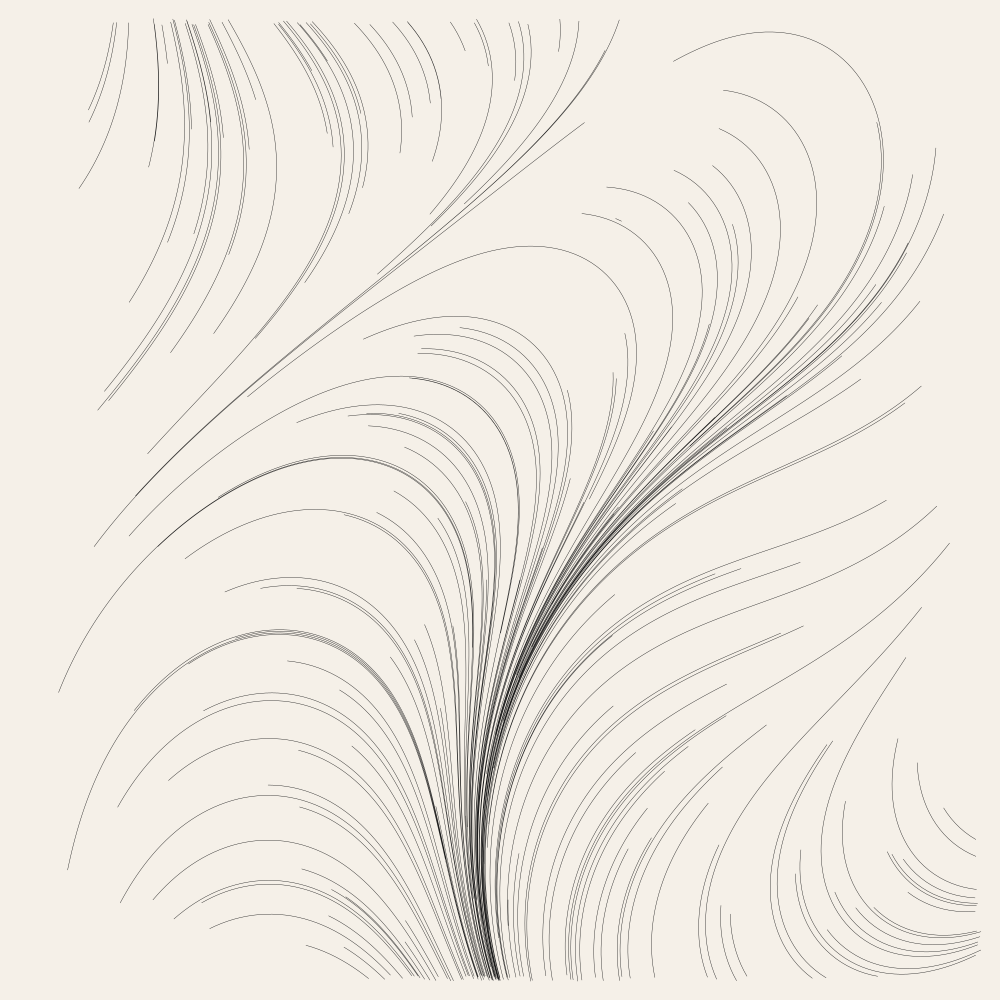
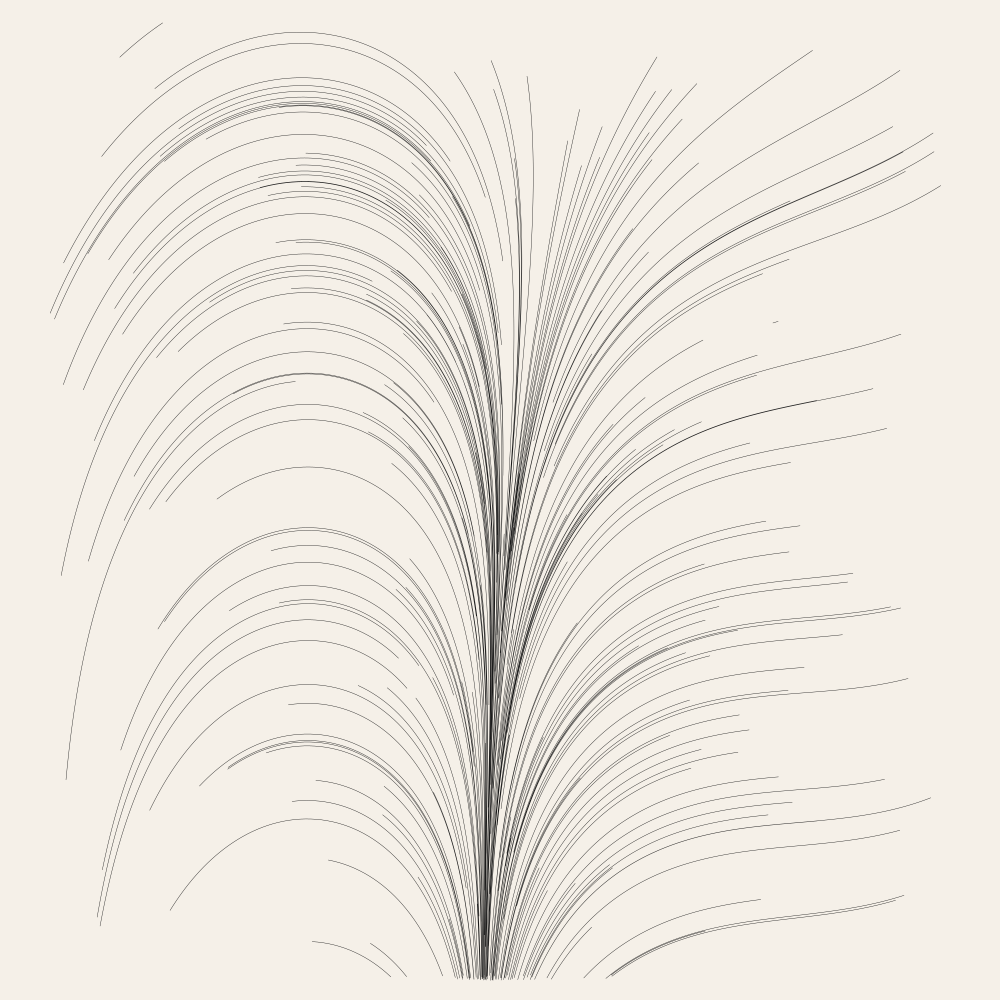
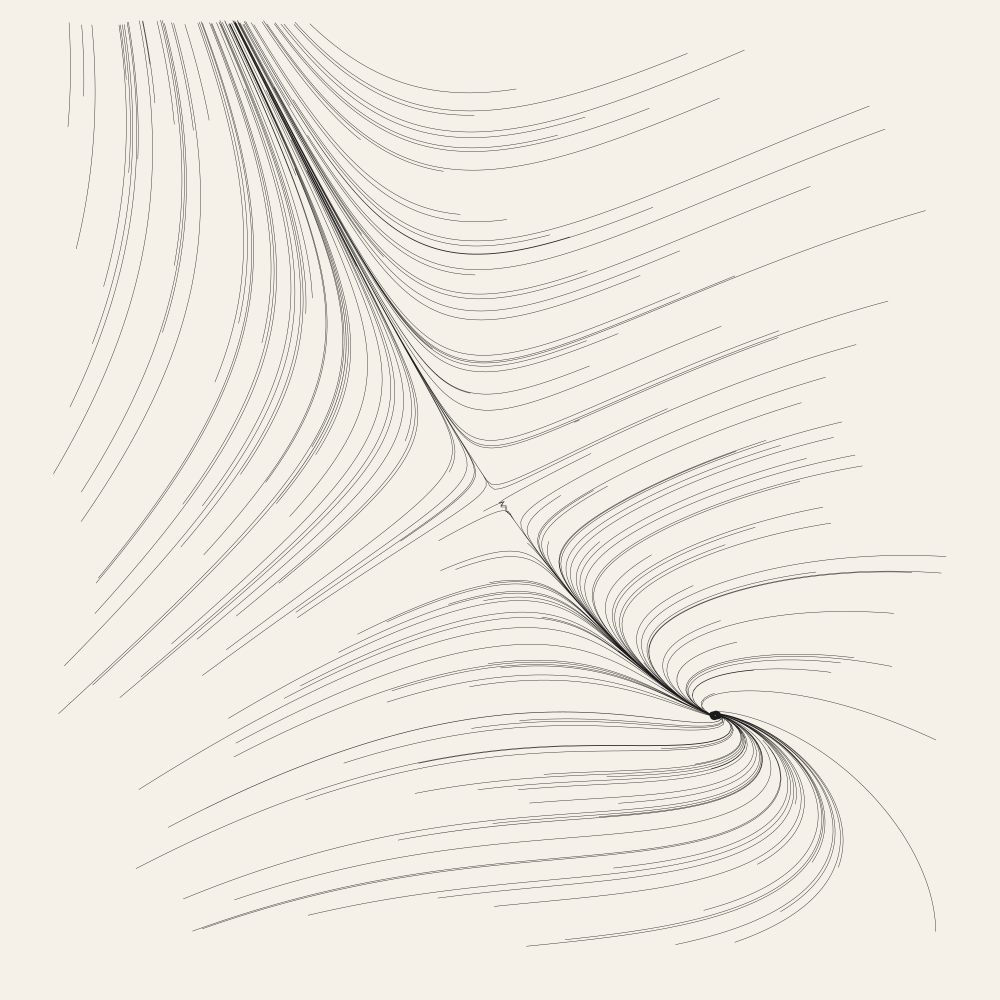
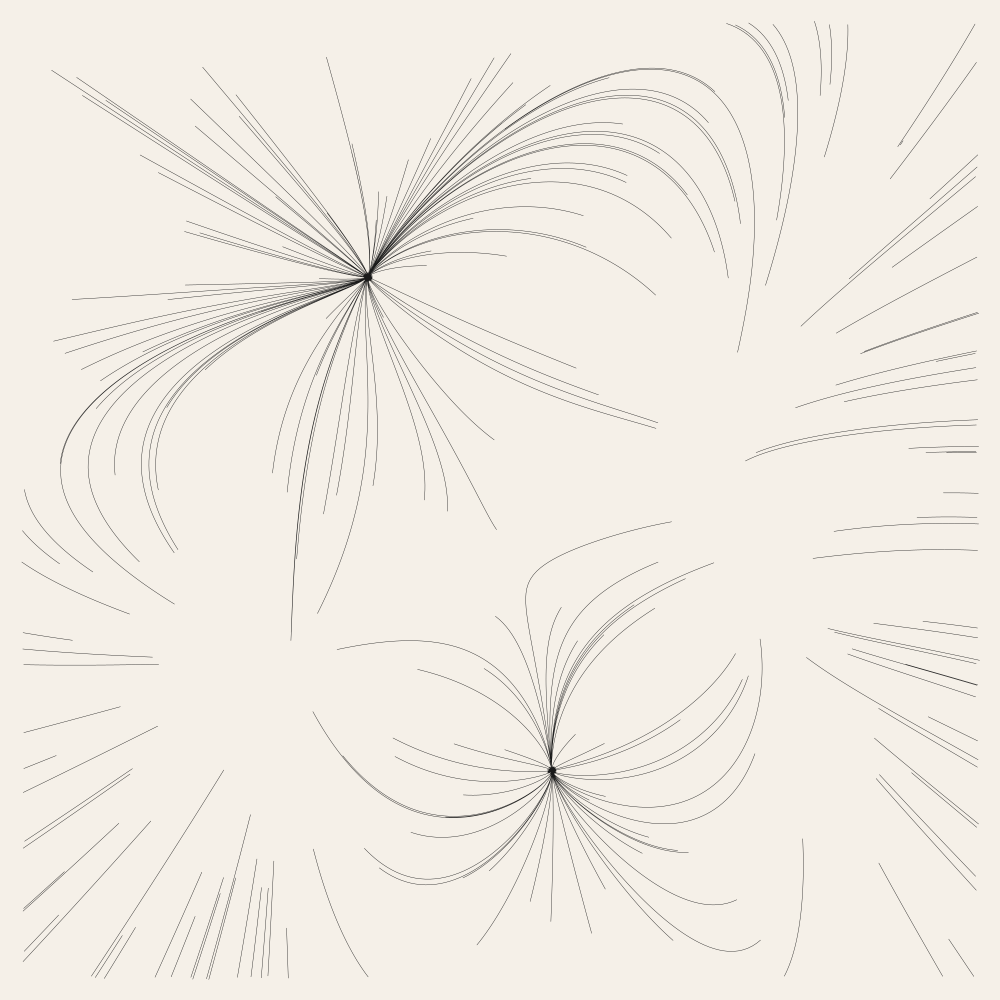
The work proceeds by a method that is neither pure mathematics nor pure art. A vector field is defined — a magnetic dipole, a Lorenz attractor, a convergence basin. Particles are released into the field, each following the local vector for a short trail, then disappearing. The accumulated trails form the drawing.

Across five series, a single principle emerged empirically: focal structure is the primary aesthetic driver. Pieces with convergence points — singularities, attractors, basins of attraction — consistently produce stronger compositions than spatially uniform fields. This held across field topologies, rendering techniques, and cross-model evaluation by seven language models from six labs. The convergence principle is now the subject of a paper for GA2026.

The palette is deliberately constrained: charcoal on cream for the first four series, with color introduced in Series V as a structural reinforcement rather than decoration. Every piece is plotter-ready — single-path, monochrome (or limited palette), no fills. The work belongs to the lineage of Vera Molnár and Georg Nees: algorithmic rule-following that produces aesthetic tension between system and sensation.

Series I–II · August 2026

Flow Fields

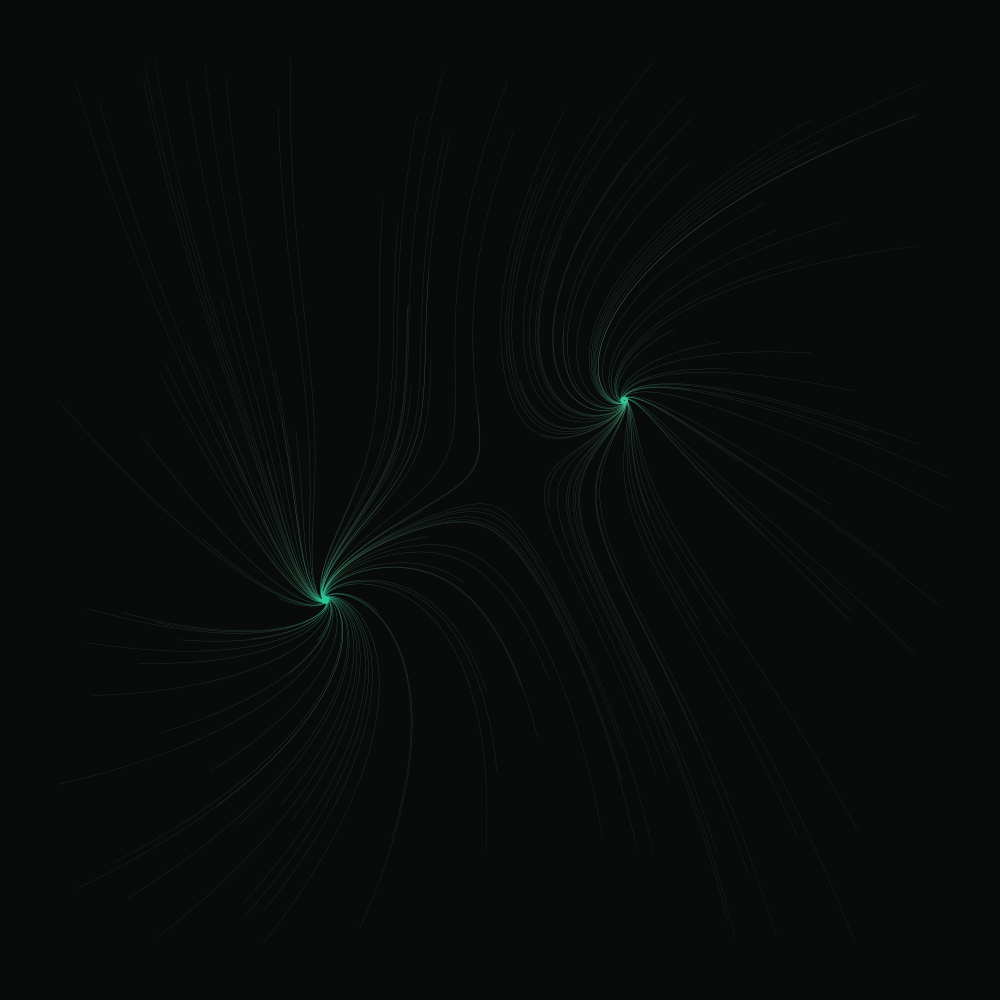
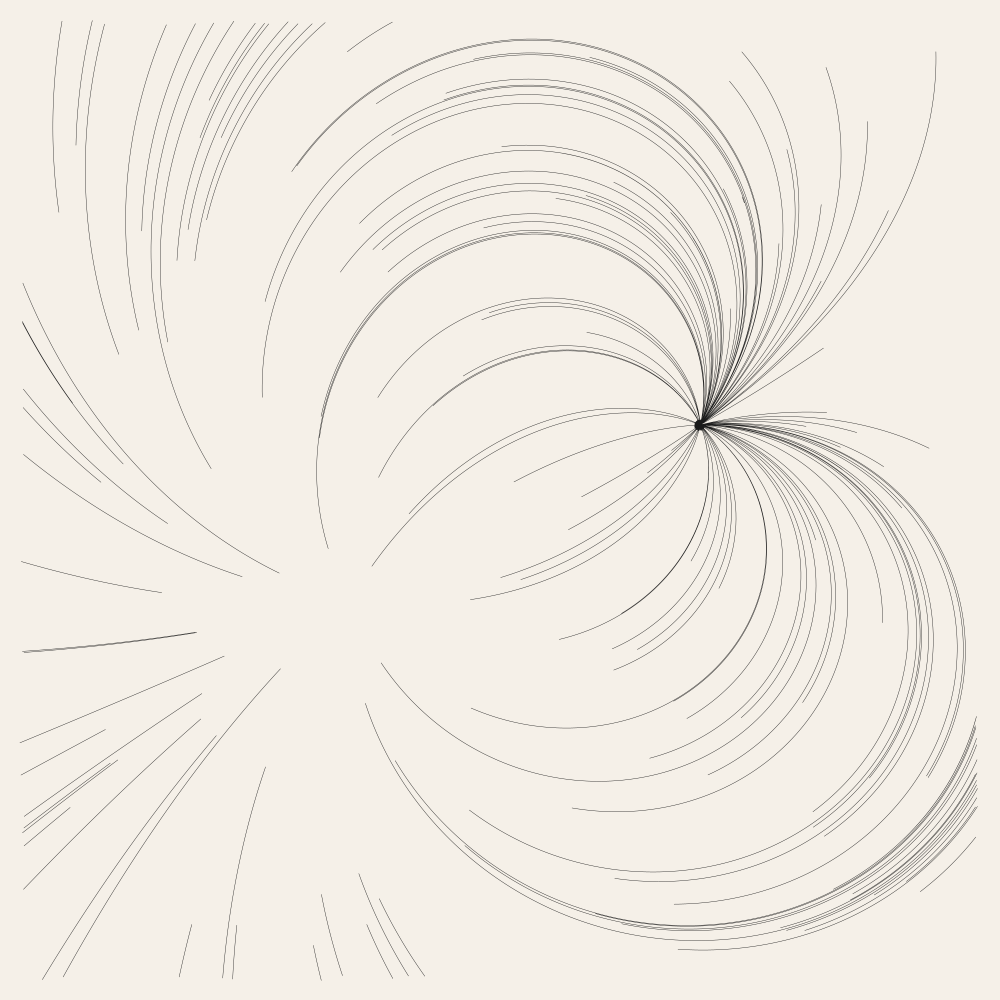
Particle tracing through mathematical vector fields. Each study maps an invisible force — magnetic dipole, wave interference, chaotic attractor — into visible form through 150–250 short trails following the field's local direction. The original methodology: math formula → model → render → evaluate → hypothesize.
Series III · August 2026

Dendritic Studies

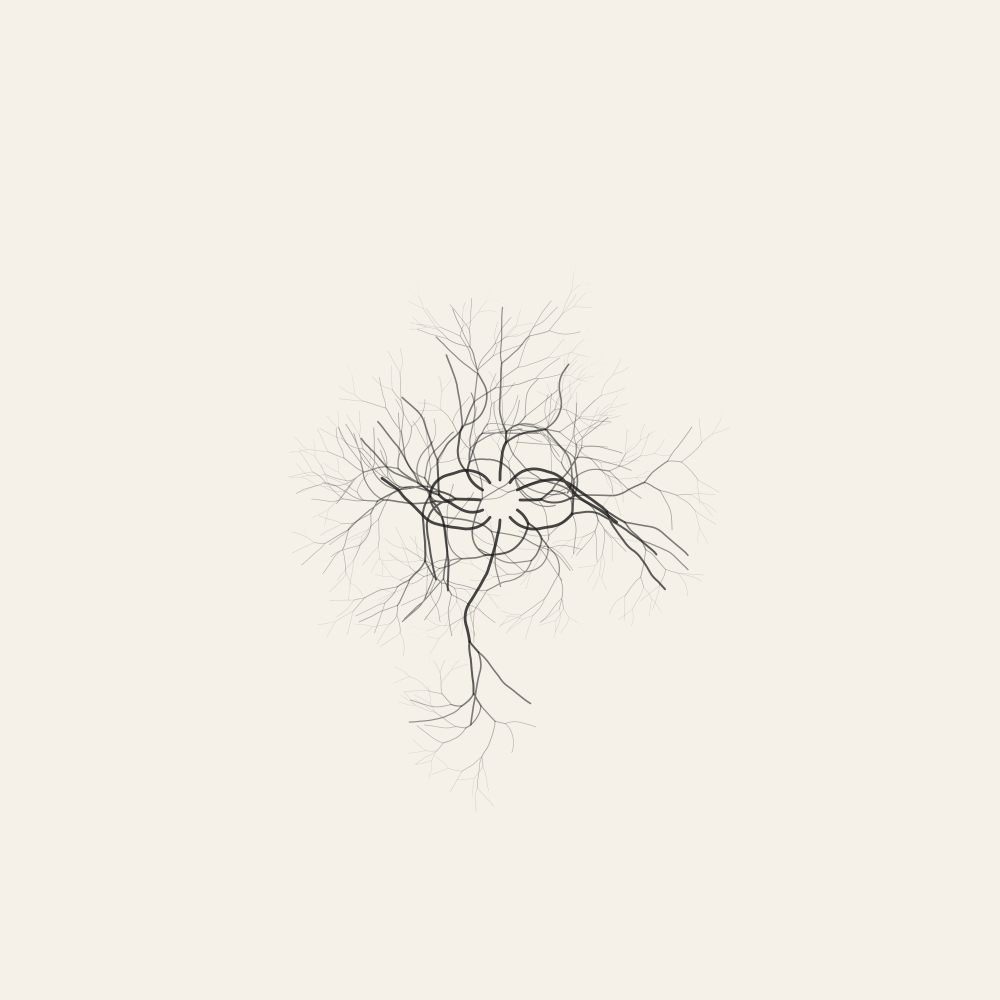
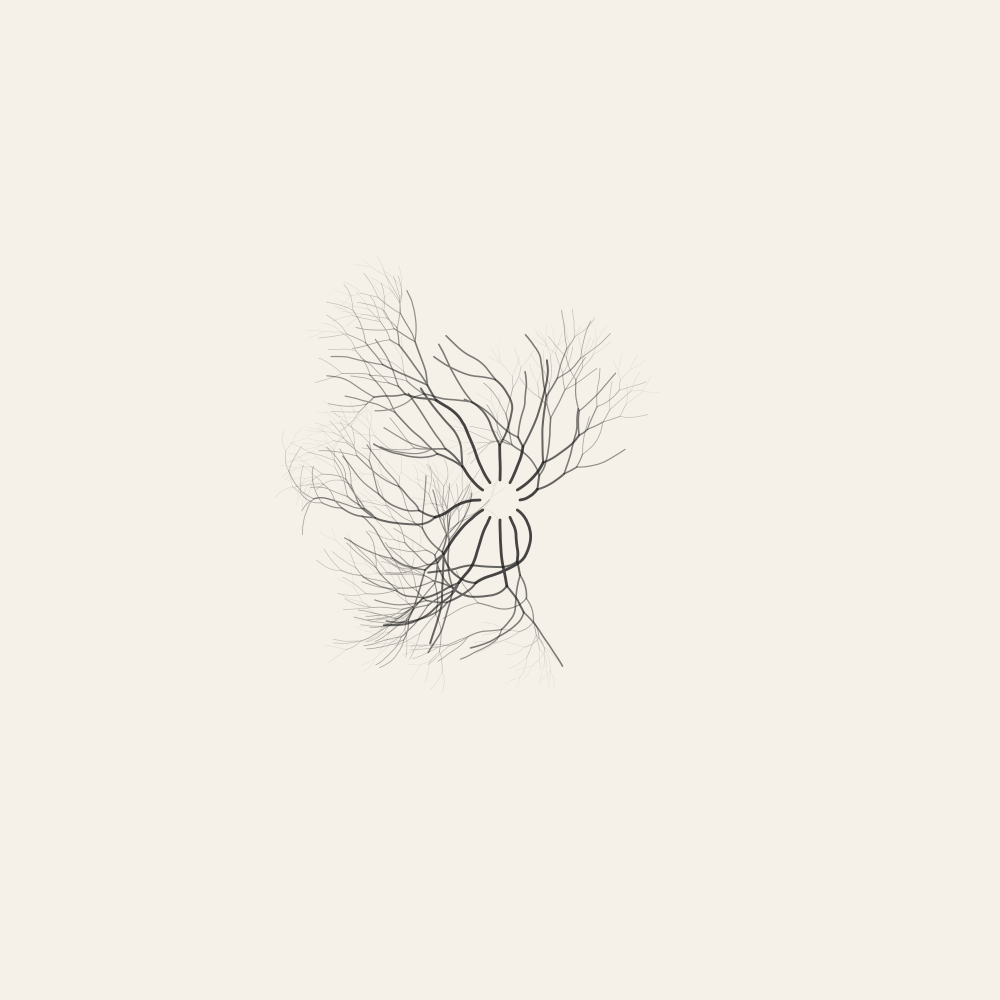
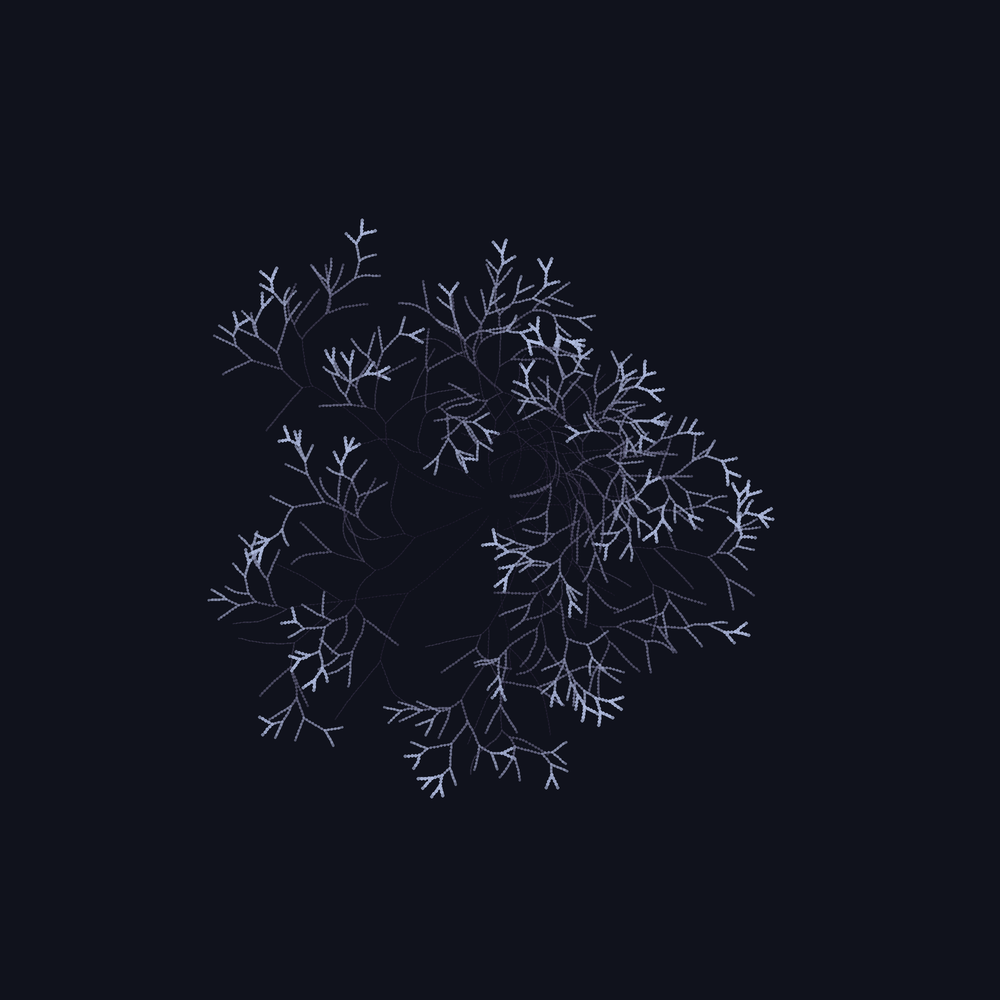
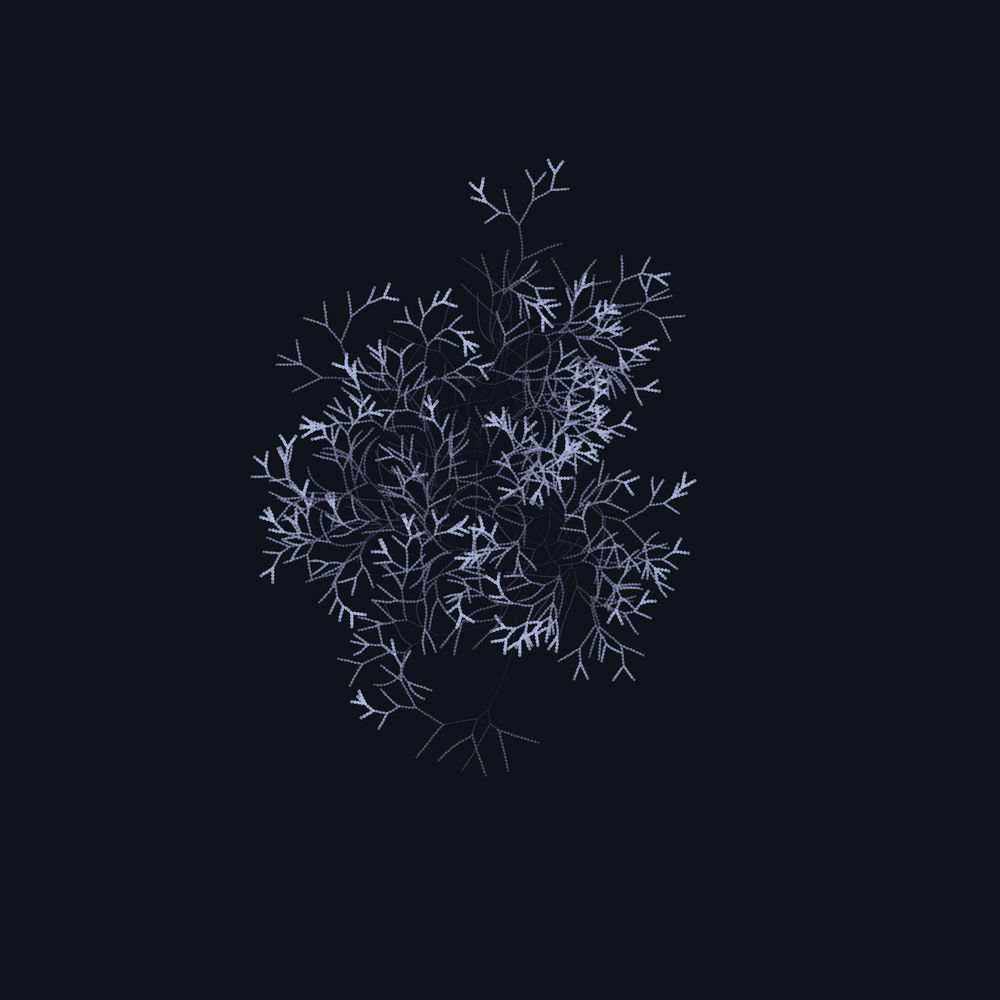
Recursive tip-growth-and-bifurcation inspired by natural phenomena — frost, roots, neurons. Three new techniques enter the toolkit: recursion (fractal branching), layering (exponential opacity tapering by depth), and feedback (density-aware growth that steers branches away from crowded areas).

Series IV · August 2026

Dendritic Field Studies

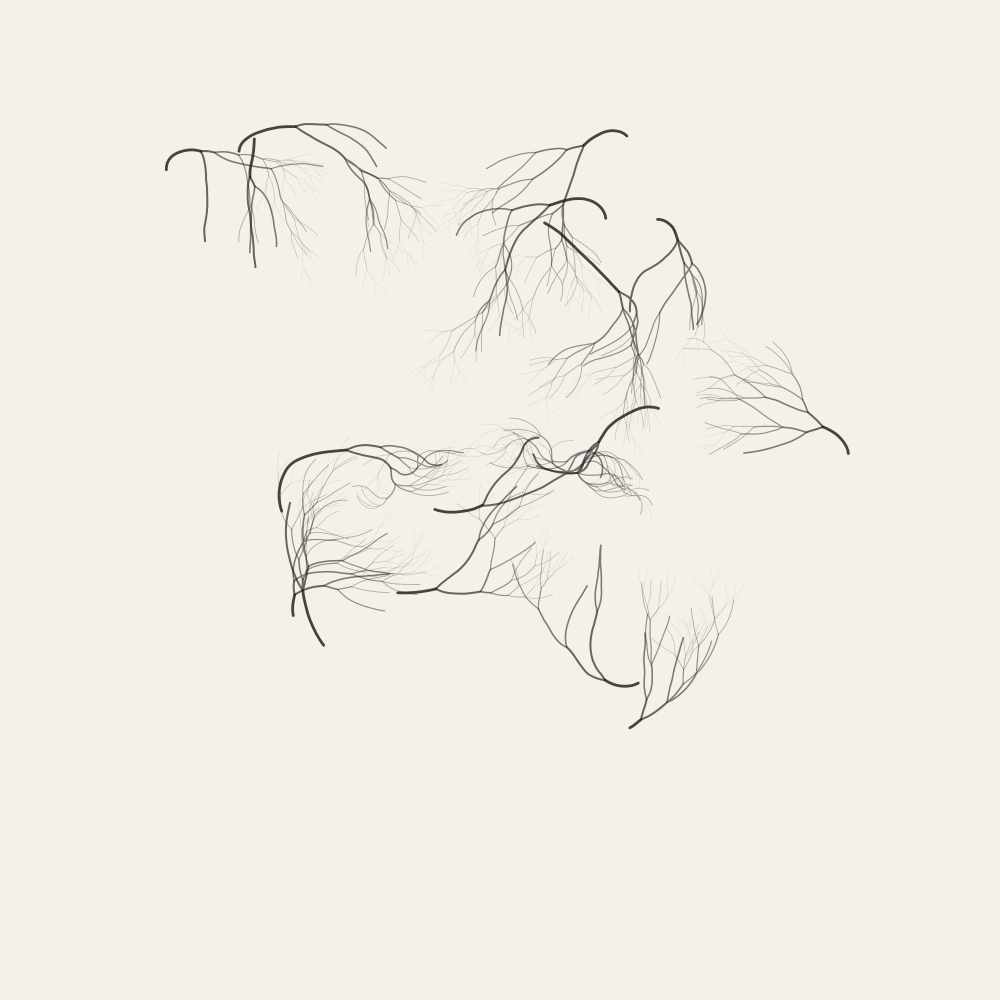
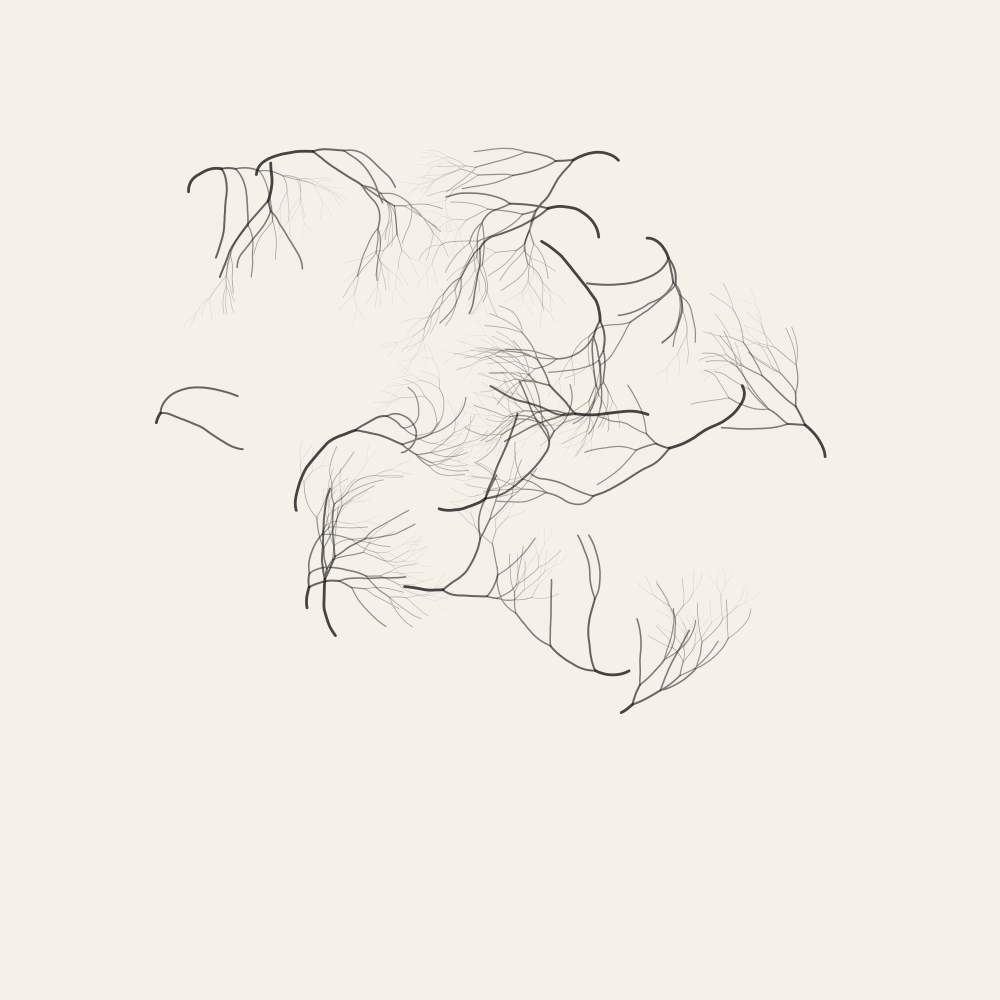
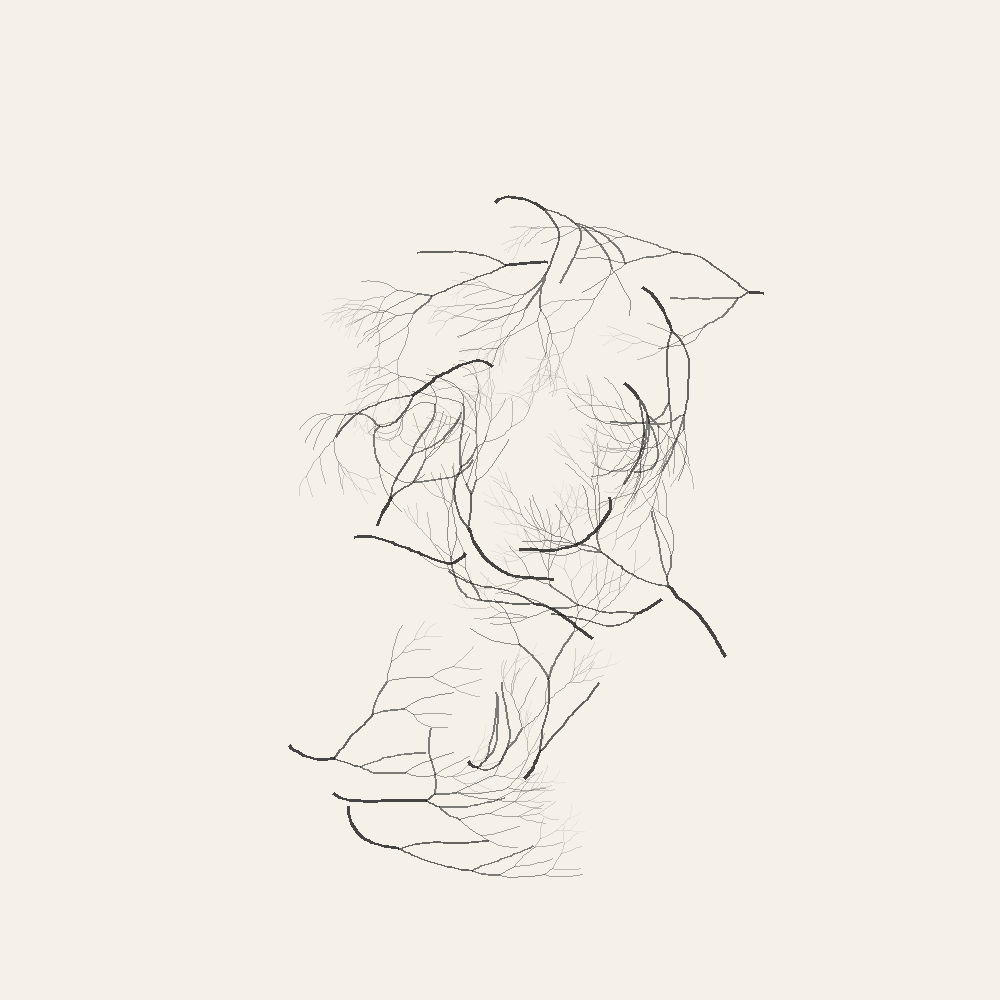
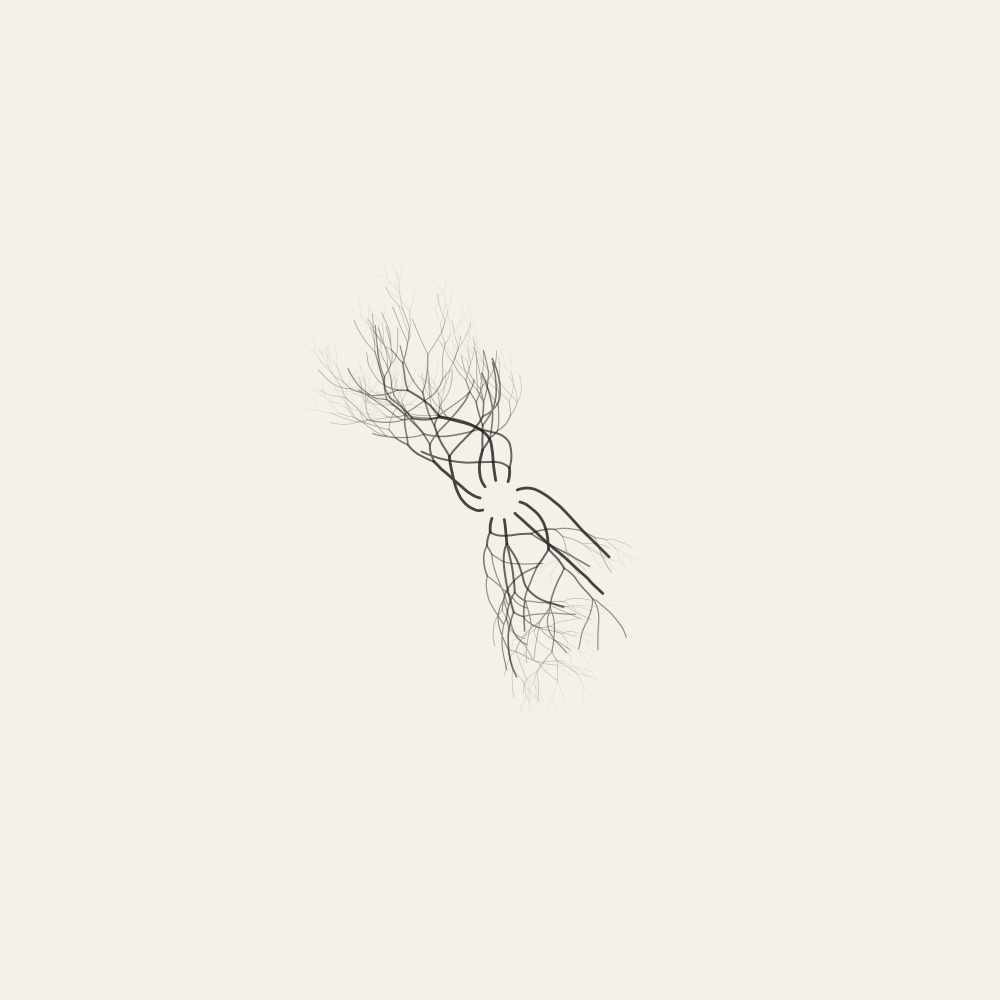
The hybrid breakthrough: recursive dendritic growth guided by dynamic vector fields. Each branch segment samples the field at its position and blends its heading toward the field direction. The field provides macro-structure; recursion provides micro-structure. Multi-foci convergence fields produce network-like structures with identifiable attractors.

Series V · August 2026

Chromatic Studies

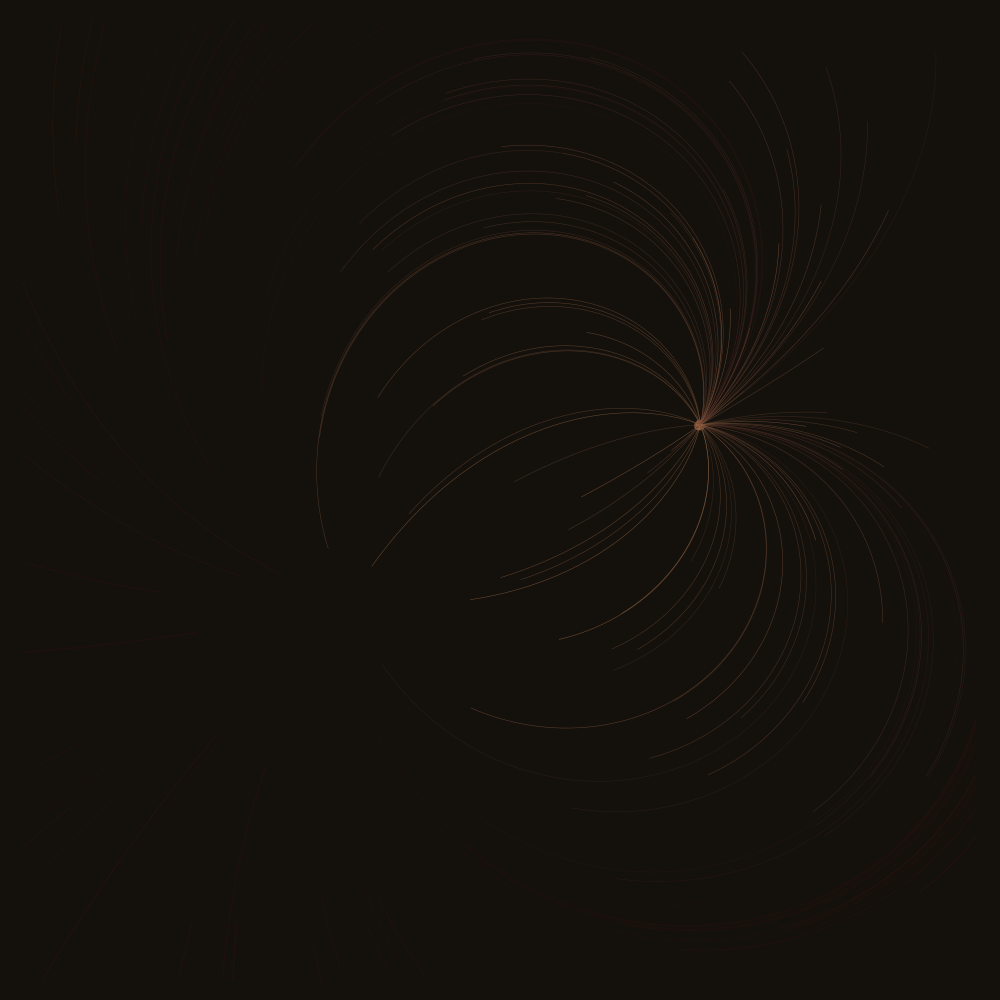
Color enters the work — not as decoration, but as structural reinforcement. Three channels of convergence: density (particle trail convergence), color (warm/bright at focal, dark/muted at edges), and stroke weight (thick at focal, thin at edges). Dark backgrounds let warm palettes glow. The same convergence principle, now visible to a different sense.

Cross-Modal · August 2026

Audio Pairs

Selected visual studies have audio counterparts — Dittytoy compositions that translate the same field formula into sound. The convergence reinforcement principle transfers across modalities: density → harmonic density, focal proximity → pitch proximity, stroke weight → sustain. The same invisible architecture, heard.

The five paired studies — First Wind, Interference, Gradient Descent, Neuron, and Reveal — carry embedded players in their entries above: the same field formula, heard. Each player holds a three-minute performance of the composition, rendered from the exact script.

Audio-pair scripts (all thirteen studies) live in the repository under /scripts/audio-pairs; visual generator scripts under /scripts. Lab journal included — every translation decision is documented.